

A Brief Vision
A great meme as a response to MFA-poetry, and the things you learn in the sauna.

I’m about to show you one of my favorite internet memes. Ordinarily, I’d tell you about when I first saw it, what I was up to and what was going on in my life — I’m oddly good at recalling these sorts of things. But not this one. I have no idea when I first saw this. I must’ve been in college. To this day, I’ll remember it and chuckle roughly once a month, usually in a public place. But, beyond that, it’s just sort of always existed.
The meme in question:
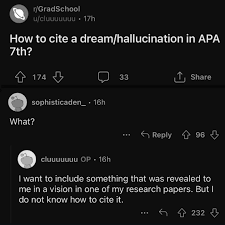
I could get into a whole tangent about how I think some of the best writing in the world today is done in a few short sentences on social media platforms. I’m not sure about you, but I find a lot of MFA-style contemporary poetry really boring and a bit empty. I think a poem, even a complex one, should suggest enough depth on the first read to compel the reader to read it again. And I think that most contemporary poetry I find simply conveys that the author is sad and stuck, or is momentarily happy with an undertone of being sad and stuck, or has found transcendence from previous sadness and stuck-ness that is nevertheless completely defined by previously being sad and stuck.
In the way that Nirvana was Seattle’s reaction to glam metal and paninis are the answer to XL sandwiches, I think certain parts of Twitter, Reddit, and the others are humanity’s reaction to the MFA-ification of high-order literature and poetry. Enough people (I’m not sure when, probably around 2010-ish, very roughly) were reading poetry and thought, “you know, this really doesn’t describe my experience at all,” and they turned elsewhere. Country music has existed opposite pop and rock for decades. I sincerely believe social media — and Twitter specifically — is the written equivalent.
I told myself, two paragraphs ago, that I wasn’t going to get into a whole tangent about this, so I’m going to start coming up for air instead of really mining this for all it’s[1] worth. I don’t think it’s controversial to suggest more people are reading Twitter than poetry these days. So I mean to say two things more specifically.
First, that writing style is a non-trivial part of the Twitter experience. Twitter prides itself on the immediacy and breadth of crowd-sourced knowledge, which is probably their primary selling point. But the suggestion algorithms and size of the user base select for interest, and I think genuinely fascinating styles of satire, nihilism, absurdism, etc. have evolved on the platform — and that these are interesting in a literary sense as well as a “something to laugh at while I poop” sense.
“Twitter’s style” is moronic and absurd to refer to as some monolith. But, for the purposes of this argument I’m making, I need some vector by which MFA-poetry and “the Twitter-lith” are diametrically opposed. This is my second point: the interesting parts of Twitter are reactions to, specifically, the vacuousness of MFA-style.
Take this poem by Rupi Kaur — which I’m choosing because of its absolute fungibility with a zillion other poems that show up on people’s Instagram stories (so apologies for the drive by):

I don’t care for this poem. I could get into a whole diatribe against this whole school of poetry — I’d start with the fact that art’s whole function is to allow humanity to build new images of our reality (in the Alva Noë Entanglement/Strange Tools school), and that these images are the means by which we create better worlds for ourselves, either by further understanding the nature of our ignorance/pain/inadequacy or by understanding how we can move past it (two sides of the same coin), yet Kaur really only seems interested in creating a shallow, hollow world in which she decides that someone else lacks humanity when, in fact, she’s the one who has nothing in particular to say about them, or even about herself.
But I’m not giving that diatribe. I’m going to get off the train here by asking you to compare Kaur’s poem to that Reddit post I’ve included above. You read the poem for the first time, and it suggests that it has something more to say, and it takes two more reads to realize that it actually says nothing. The Reddit post seems nonsensical and dumb at first glance, and then you realize it’s pretty damn funny.[2]
The poem is suggestive but vacuous. The post is blunt, dumb, and oddly transcendent. I think people turn away from formal poetry and towards social media along these lines.
You might be thinking, “Connor, it’s a funny Reddit post, but it’s not that funny. Why are you writing about this? This is dumb.”
I’ve been in the sauna a good bit this week. I think someone futzed with the thermometer or the regulator or something, because normally the sauna shuts off around 180°, but it’s been ripping as high as 193° this week and I couldn’t be happier.
I haven’t been meditating much, recently. But I’ll go in the sauna in the evenings, and I’ll just sit for 20-25 minutes, and there’s nothing to do except feel the sting of the hot air in your nostrils and occasionally wipe sweat from your forehead. And it’s become a bit of an informal meditation practice.
Most of the time, the sauna is an exercise in tolerating discomfort. The last five minutes or so are usually pretty hairy, and you start getting anxious and itchy and you just want to get the hell out of there. But these five minutes are where all those good hormones are released, and so you just tough it out. And you learn how to be comfortable being uncomfortable, which is always a good skill to have.
But sometimes it’s easy. Your mind just totally clears, and you realize you’re totally comfortable in the heat, and 25 minutes goes by like 6 minutes, and in the meantime you have a couple deeper realizations about things, and you realize Plato was probably more spiritually-apt than Aristotle because there are certain realizations that aren’t derived syllogistically from observations about the primary substances — nor even from thinking itself, which I’m more and more down on each passing day. There are certain things you just simply realize and know to be true and that’s that.
So I present the following:
Rationality evolved, cognitively, as a fear response. In situations when we feel fear, we try to construct a mental model of the situation and manipulate that model. In this way, we make predictions about different courses of action and their results. This is “thinking it through.”
The Greeks would say that these forms of rationality are man’s highest good — and go so far as to say that “rational thinking” is good for its own sake. This is false.
When we think, we build a mental representation of a situation, and then we cede responsibility to that mental representation. We’re no longer controlling the situation ourselves. We’re asking this mental representation to tell us what to do.
You might respond, “well, the mental model exists in my head, so it’s mine.” This is also false. You could write that model down on paper and have someone else read it, and then that model would be theirs as well. The model exists conceptually, as words not-yet-on paper. Concepts, written ideas, lines of logic — all of these are fungible and a posteriori. They’d exist just the same in my head as in yours, so they aren’t either of ours. They’re modes of understanding, but they are not understanding itself — true understanding is inexplicable.
Of course, rational thought has its time and place. If you’re learning something (in school, not from experience), then you have to learn from a mental model. There’s no other way. One day, you might encounter similar concepts in the real world, and what you’ve learned from your mental model might prove very helpful.
But, when we act based on our mental models, we admit that we didn’t trust ourselves to act. We were too scared to trust ourselves and act for ourselves.
Maybe it’s debatable if this is for better or for worse. All I can say is, as someone who’s tried to play pro golf based on intensive, logically-valid mental-modeling, I can tell you that it doesn’t work. As I’ve learned to give up rationality as a crutch and trust myself inherently, I’ve played much better golf.
In hindsight, there’s a pretty clean delineation between all the decisions in my life: athletic, academic, social, romantic, occupational, recreational, spiritual. The ones I made on the basis of rational choice were usually flawed (with the best models taking the longest to prove themselves wrong). But I’m not sure I’ve made a decision of my own, that I’ve truly, personally trusted, that’s ever led me astray.
(A higher self, personal communication, Sea Palms sauna, March 3rd 2026)
[1] A strange grammatical note here: could this be either “for all it’s worth” or “for all its worth”? The former being “for all it is worth” and the latter “for all the worth that it has”? I genuinely think either is acceptable!
[2] In ways that I refuse to expound upon because I refuse to ruin the joke for myself or others.
I think you'd find my friend Alex's recent post entitled "You're probably addicted to thinking" interesting: https://deepfix.substack.com/p/youre-probably-addicted-to-thinking
Mozartesque use of “syllogistically.”
“there are certain realizations that aren’t derived syllogistically from observations about the primary substances — nor even from thinking itself, which I’m more and more down on each passing day. There are certain things you just simply realize and know to be true and that’s that.”